Emergency Roof Tarping & Desert Storm Containment in Henderson, NV
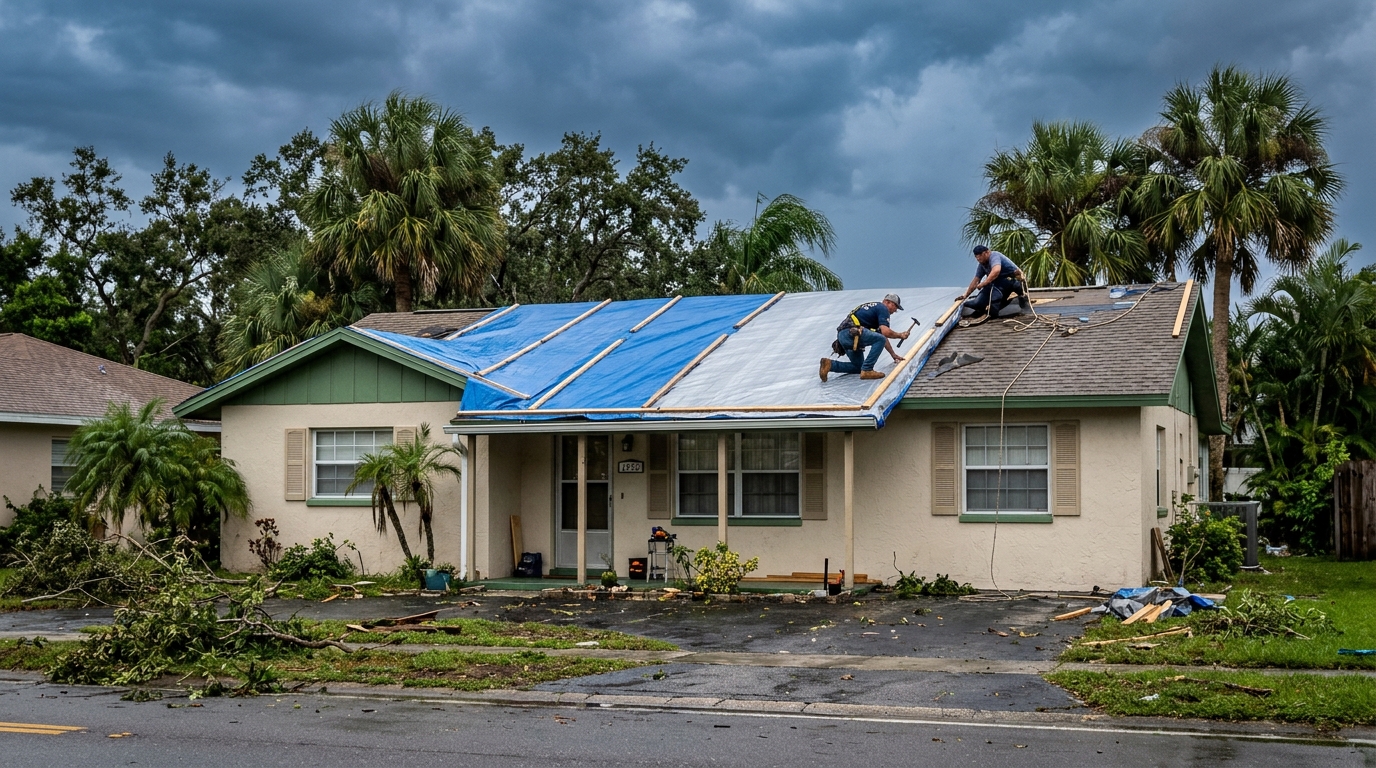
High-velocity straight-line winds sweeping down from the McCullough Mountains and Black Mountain frequently exceed 55 to 70 MPH, dislodging brittle concrete tiles, shearing ridge caps, and exposing naked underlayment to torrential monsoon downpours. Our emergency telephone dispatch desk immediately coordinates licensed Nevada crews equipped with heavy-duty 10-mil poly tarps, timber battens, and commercial heat-shrink wrap to secure damaged roofs.
Experiencing Active Roof Failure or Storm Ingress?
Zero web forms, zero digital delays. Speak directly with a live Henderson emergency dispatch coordinator to route vetted, licensed local Nevada contractors.
CALL 24/7 DISPATCH: (888) 208-4155 CALL NOW: (888) 208-41551. Regional Microclimate Dynamics & Henderson Desert Storm Stressors
Henderson's southern foothills experience severe localized wind funneling. During microburst thunderstorms, rapid downdrafts create intense aerodynamic suction along windward eaves and ridge lines in Anthem and Seven Hills. When tiles are blown off or chatter loose, exposed underlayment is shredded by driving desert grit. Standard lightweight blue tarps secured with loose cinderblocks or bricks will fail within minutes under 60 MPH desert gusts, causing additional property damage.
During extreme summer conditions, attic heat exceeds 165°F across homes in Green Valley Ranch, Anthem, and Seven Hills. Underlayment paper installed during initial subdivision construction becomes brittle and cracks. When sudden convective downpours strike, high-velocity rainwater penetrates cracked tiles and breaches failing underlayment, triggering rapid interior drywall damage.
2. Non-Destructive Moisture Diagnostics & FLIR Thermal Radiometry
Emergency crews execute a comprehensive structural assessment upon arrival. Before setting anchor battens, technicians map the full boundary of compromised sheathing and inspect rafter trusses for wind-induced twisting or uplift failure. Digital photographic documentation records all displaced tiles, fractured battens, and water intrusion vectors for subsequent insurance claim forensic scoping.
Tile roofs are notorious for lateral water tracking: rainwater enters through an upper ridge or valley seam, travels horizontally across batten strips, and drops into ceilings 20 feet away. Advanced thermography detects evaporative cooling signatures within attic framing, pinpointing exact structural compromises without unnecessary destructive removal of intact tile fields.
• Key Technical Engineering Protocols: Post-Storm Roof Tarping
- Batten-Anchored 10-Mil Poly Tarps engineered to withstand 60+ MPH desert microburst winds.
- Heat-Shrink Wrap Technology for delicate clay tile profiles without driving nails through tiles.
- Full Forensic Insurance Documentation including high-resolution digital photographic proof.
- Direct Connection to Licensed NSCB C-15 Roofing Contractors across Henderson.
3. Step-by-Step Substrate Restoration & Material Science
Tarp installation utilizes heavy-duty, UV-stabilized 10-mil woven polyethylene tarps. Unlike standard retail tarps, these commercial membranes resist severe ultraviolet degradation. The tarp perimeter is sandwich-rolled into continuous 2x4 spruce furring strips and secured into roof trusses using corrosion-resistant 3-inch framing fasteners. On fragile clay tile roofs, heat-shrink wrap film is thermally welded to form an impermeable monolithic cap without puncturing surrounding tiles.
Standard felt paper (organic 30# or 43#) is inadequate for long-term desert roof performance. Professional restoration requires upgrading to self-adhering SBS modified bitumen membranes (ASTM D1970) rated for continuous heat exposure up to 250°F. These elastomeric membranes seal self-tight around fastener shanks, providing permanent waterproofing beneath concrete and clay tiles.
4. State Energy Codes & Nevada Contractor Licensing Compliance
All temporary containment protocols align with FEMA storm mitigation recommendations and City of Henderson Emergency Response guidelines. Dispatched contractors carry active NSCB C-15 licensing, ensuring that emergency measures protect building integrity while preserving eligibility for full insurance adjustment without violating policy mitigation clauses.
The Nevada State Contractors Board (NSCB) mandates that any physical roofing repair exceeding \,000 in labor and materials must be executed by a licensed C-15 Roofing Contractor holding statutory bond coverage and workers' compensation insurance. Our dispatch network strictly verifies that all on-call crews maintain active licenses in good standing under NRS Chapter 624.
5. Preventative Property Maintenance & Severe Storm Preparedness
Emergency tarping is an interim stabilization measure designed to safeguard your home until comprehensive lift-and-relay tile restoration can be performed. Once weather conditions stabilize, contractors conduct a formal forensic inspection to specify permanent underlayment replacement, new mechanical tile clips, and code-compliant flashing assemblies.
In Henderson's extreme desert climate, routine preventative maintenance saves thousands of dollars in premature roof replacement. Homeowners in Anthem, Green Valley Ranch, and Seven Hills should schedule bi-annual inspections to clear closed valley pans of caliche silt, replace cracked ridge caps, and inspect plumbing vent boots before summer monsoon downpours arrive.
Need Urgent Post-Storm Roof Tarping in Henderson, NV?
Our dispatch desk coordinates 24/7 emergency response across Green Valley Ranch, Anthem, Seven Hills, and Lake Las Vegas.
CALL 24/7 DISPATCH: (888) 208-4155 CALL NOW: (888) 208-4155